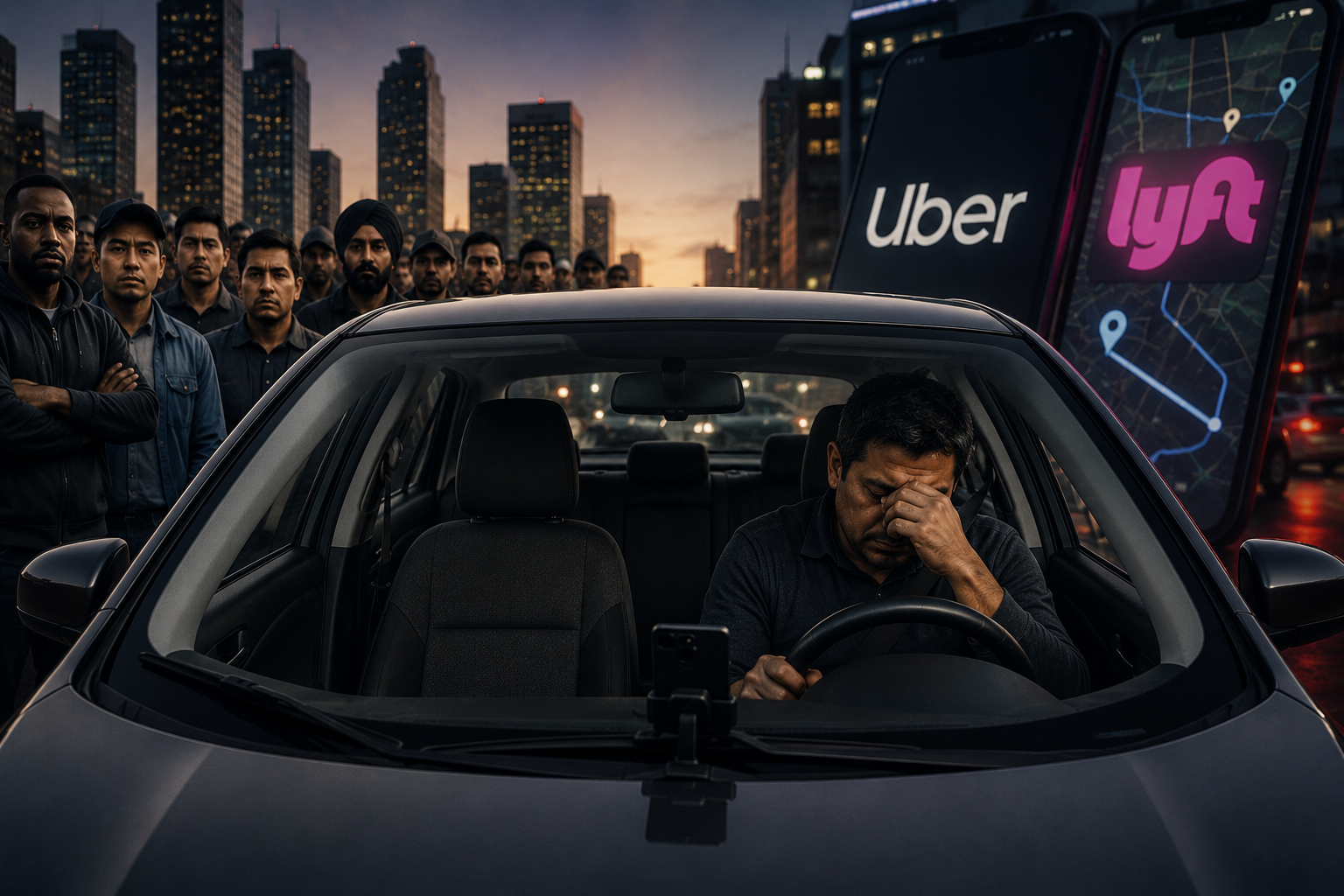
?Why Rideshare Drivers in America Struggle to Win Their Fight Against Uber and Lyft.
For years, rideshare drivers across the United States have organized protests, strikes, and online campaigns demanding better treatment from companies such as Uber and Lyft. Yet despite these efforts, meaningful changes remain difficult to achieve.
The problem is not simply the power of the rideshare companies. One of the biggest obstacles is the lack of unity among drivers themselves. Cultural differences, economic realities, government regulations, and algorithmic control all contribute to making collective action extremely difficult.
Different Cultures, Different Priorities
The American rideshare workforce is one of the most diverse labor groups in the country. Drivers come from Africa, Asia, Europe, the Caribbean, Central America, South America, and many other regions of the world.
While diversity is one of America’s greatest strengths, it can also create challenges when drivers attempt to organize around common goals.
Many immigrant drivers support families not only in the United States but also in their countries of origin. However, the cost of living varies dramatically from one country to another. For some drivers, the income generated through Uber and Lyft is more than enough to support their families abroad. For others, especially those supporting relatives in higher-cost regions, the financial pressure is much greater.
As a result, drivers often have very different expectations regarding what constitutes fair pay. When calls for strikes or protests arise, many drivers choose not to participate because they are satisfied with their current earnings. This weakens collective bargaining efforts and makes it easier for the platforms to ignore driver complaints.
The Problem of Expectations
When Uber and Lyft first entered the market, drivers enjoyed exceptionally high earnings. There were fewer vehicles on the road, less competition, and fewer restrictions imposed by platform algorithms.
Drivers could work as many hours as they wished and often earned significantly more than the average worker in many professions.
Over time, however, the industry changed. More drivers joined the platforms, competition increased, and sophisticated algorithms began controlling ride distribution and earnings opportunities.
Many drivers compare today’s income levels to those early years and feel disappointed. While earnings have certainly declined in many markets, part of the frustration comes from expectations formed during a period that may never return.
Government Intervention and the Equalization Effect
In New York City, the Taxi and Limousine Commission (TLC) introduced regulations designed to guarantee minimum hourly earnings for rideshare drivers.
While policymakers view these rules as a victory for workers, many drivers believe the regulations have produced unintended consequences.
According to numerous drivers, ride assignment algorithms now prioritize income equalization among drivers. In practice, this means a driver who has already earned above a certain threshold may receive fewer ride requests, while another driver receives priority.
Many drivers report situations where they are physically closer to a passenger but do not receive the trip because the algorithm is attempting to balance earnings across the driver network.
Critics argue that this system discourages experience, strategy, and efficiency. Whether a driver is highly skilled or completely new to the business, the algorithm increasingly influences earning opportunities.
The Real Issues Drivers Should Be Fighting For
While many drivers focus primarily on fares and pay rates, there are other concerns that may be even more important.
One of the most significant issues is transparency.
Many drivers are required to accept ride requests without having access to complete information about the trip. Refusing too many rides can reduce acceptance rates and may result in the loss of certain platform privileges.
Drivers should have the right to know key details about a trip before accepting it. This information is essential for planning their day, managing fuel costs, scheduling family obligations, and deciding which areas they want to work in.
A driver may need to pick up a child from school, meet a spouse after work, or remain within a particular neighborhood. Yet by accepting trips without full information, they can find themselves 30 or 40 miles away from where they intended to be.
In many cases, the lack of trip transparency costs drivers more money in fuel, tolls, and unpaid return miles than a small fare increase would compensate for.
Many people enter rideshare driving seeking flexibility and independence. Ironically, some end up feeling controlled by algorithms that dictate where they work, when they work, and how much information they are allowed to see.
Conclusion
The challenges facing rideshare drivers in America go far beyond hourly pay.
Cultural differences, conflicting economic interests, government regulations, and platform algorithms all contribute to a fragmented workforce that struggles to organize effectively.
If drivers hope to achieve meaningful reforms, they may need to focus less on short-term fare increases and more on transparency, freedom of choice, and the right to make informed decisions about their work.
Until then, Uber and Lyft will likely continue to maintain the upper hand in the ongoing debate over the future of rideshare driving in America.