amazon versu mandami

Mamdani Backs Bill That Would Change Amazon’s Delivery Model in New York City


The proposal would require certain distribution centers to directly employ their delivery workers, strengthen road-safety training and assume greater responsibility for what happens on city streets

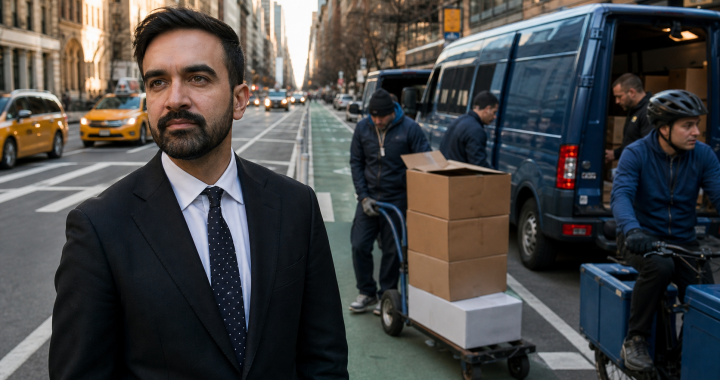
New York City Mayor Zohran Mamdani has publicly endorsed the Delivery Protection Act, a proposal that seeks to transform the model used by Amazon and other large companies for last-mile deliveries throughout the city.

The bill, identified as Intro 518-2026, was introduced by Council Member Tiffany Cabán. Its central goal is to prevent operators of certain distribution facilities from avoiding labor and safety responsibilities through subcontractors.

Although the mayor’s support increases political pressure for its passage, the measure is not yet law. According to the New York City Council’s official record, the bill remains in committee following a hearing held on April 9, 2026.

What Would the Proposal Change?

Amazon uses a network of companies in New York known as Delivery Service Partners, or DSPs. These companies hire the drivers who deliver packages using vehicles, electric bicycles and other forms of transportation associated with the Amazon brand.

Legally, many of these delivery workers are employed by subcontractors rather than directly by Amazon.

The proposal would require certain warehouses and last-mile facilities to obtain a license from the Department of Consumer and Worker Protection. It would also require the operator of each covered facility to directly employ the people who perform its core warehouse and delivery services.

Among the proposal’s most important provisions are:

  • A license for each last-mile facility, carrying an annual fee of $500 and a two-year term.
  • Direct employment of warehouse workers and delivery drivers who work more than eight hours during a 30-day period.
  • A general prohibition on using staffing agencies or subcontractors to perform these core services.
  • Hiring preference for workers currently employed by a subcontractor if their contract ends because of the new law.
  • Thirty days’ notice before termination, except in cases of serious misconduct.
  • At least six hours of training covering labor rights, defensive driving, pedestrian safety, bike lanes, heat stress and injury prevention.

The direct-employment requirement would begin approximately one year after the legislation became law. Some existing contracts could receive extensions lasting up to two years.

The Argument From Mamdani and Labor Unions

Supporters of the bill argue that Amazon controls a significant portion of delivery routes, quotas, technology and operating standards while shifting legal responsibility for workers and accidents to its DSPs.

The Teamsters union says this model allows a corporation to exercise control over delivery workers without fully assuming the obligations of an employer. The union also argues that direct employment would make it easier for workers to organize and assert their rights.

The Mamdani administration has connected the labor issue to road safety. The proposal includes training on stopping safely along congested roads, respecting bike lanes and protecting pedestrians and other road users.

An analysis cited during the debate found increases in crashes around several recently opened distribution facilities. That finding should be interpreted carefully, however: a statistical association does not by itself prove that the warehouses caused all those crashes.

Amazon Warns About Jobs and Possible Cost Increases

Amazon opposes the proposal. In its testimony before the City Council, the company said it works with more than 40 DSPs employing approximately 5,000 people in New York City.

According to figures provided by the company, those drivers earn an average of nearly $24 per hour. Amazon argues that eliminating the subcontracting model would threaten these small businesses and could force the company to relocate distribution facilities outside the five boroughs.

The company also says it operates more than 800 electric cargo bicycles in Manhattan and Brooklyn, reducing the number of delivery vans needed to complete its routes.

Business organizations such as the Partnership for New York City warn that higher operating costs could result in more expensive deliveries. They also point to a possible unintended consequence: if warehouses move outside the city, delivery vehicles would have to travel farther, potentially increasing traffic and emissions.

What Does This Mean for New York Taxi and For-Hire Drivers?

The bill would not directly change TLC licensing requirements, taxi fares, insurance rules or the regulations governing taxi and app-based drivers.

Its effect on the industry would be primarily indirect.

If the regulation succeeds in reducing overly aggressive routes, dangerous parking and stops inside bike lanes, it could improve safety and traffic flow on streets shared by taxis, delivery workers, cyclists and pedestrians.

However, if Amazon responds by moving operations outside the city, delivery vans may have to travel longer distances from suburban and industrial areas. That could mean more vehicle miles, greater congestion at city entry points and additional pressure on the streets where taxi drivers work.

It also remains unclear what would happen with electric cargo bicycles. These vehicles can replace vans and reduce emissions, but they require clear rules concerning their dimensions, operation, parking and use of bike lanes.

A Dispute Over Who Should Be Held Responsible

The debate extends beyond Amazon. The fundamental question is who should be held responsible when a large corporation controls an operation but another company is officially listed as the workers’ employer.

Cabán and Mamdani’s proposal seeks to shift that responsibility to the primary facility operator. Amazon responds that the change could destroy small businesses, eliminate jobs and make deliveries more expensive.

Both possibilities deserve attention. Subcontracting can conceal where responsibility truly lies, but a poorly designed transition could also harm the same workers the legislation is intended to protect.

For now, there is no immediate change for consumers, delivery workers or taxi drivers. The proposal must advance through the City Council, receive a vote and be signed by the mayor before becoming law.

What is clear is that New York City is preparing for a major battle over the future of deliveries, road safety and the power of large corporations on its streets.
nye new low for delivery apps

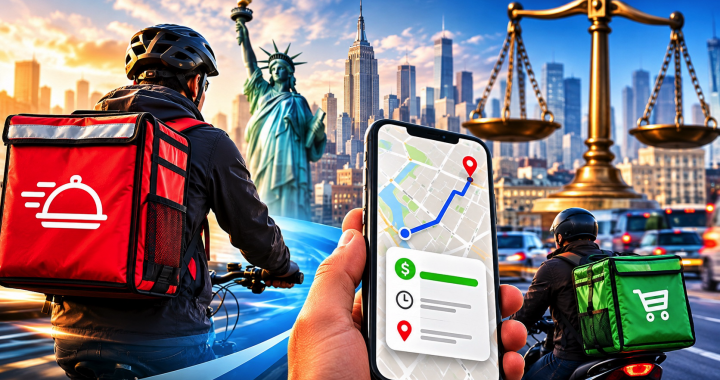
New York City Expands Delivery Worker Protections: Minimum Pay, Tips and New Rules for Delivery Apps

New York City continues to expand its regulation of app-based delivery companies. During 2026, new protections took effect affecting workers using platforms such as Uber Eats, DoorDash, Grubhub, Instacart and Shipt.

The measures go well beyond establishing a minimum pay rate. They also address tipping, pay transparency, information provided before accepting certain deliveries and protections covering different categories of delivery workers.

$22.13 Minimum Pay Rate

As of April 2026, New York City’s minimum pay rate for covered workers is $22.13 per hour, before tips.

Tips are additional and cannot be used by companies to satisfy the city’s minimum pay requirement.

However, there is an important distinction.

A “$22.13 per hour” minimum rate does not necessarily mean that every worker receives $22.13 multiplied by every hour they remain logged into an app.

Trip Time and On-Call Time

New York City’s rules distinguish between different types of working time.

One is trip time, which relates to time spent preparing and completing deliveries.

The regulations also address on-call time, covering certain periods when workers are available to receive orders.

Platforms can use specific methods established by the city to demonstrate compliance with minimum pay requirements.

As a result, calculating a worker’s compensation can be considerably more complicated than simply multiplying all logged-in hours by $22.13.

Instacart and Shipt

One of the most significant changes in 2026 involves grocery delivery.

Workers using platforms such as Instacart and Shipt are now covered by minimum pay protections applicable to this sector.

Following a transition period during the first half of 2026, additional compensation requirements took effect beginning in July.

This could have important consequences for workers.

When keeping workers available while waiting for orders creates additional financial obligations for a platform, companies have an incentive to reduce excessive waiting periods.

That could lead to changes in algorithms, restrictions on when workers can log in, or controls on the number of workers allowed to remain available at the same time.

New Tipping Rules

Restaurant and grocery delivery platforms must provide customers with an opportunity to tip before or at the time they place their order.

Among the options displayed to customers, there must be an option of at least 10% of the purchase price.

Customers remain free to choose another amount.

The rule follows a major controversy involving how some platforms changed their tipping interfaces.

According to an analysis published by New York City, changes made by Uber Eats and DoorDash were associated with workers receiving more than $550 million less in tips.

The new requirements are intended to prevent app interfaces from unnecessarily discouraging customers from tipping.

More Transparency for Workers

The protections also attempt to address the lack of information that has historically characterized app-based work.

Depending on the type of service, workers must receive relevant information before accepting certain deliveries.

That information can include the pickup address, estimated time, estimated distance, pay and information concerning the tip.

Companies must also pay workers at least weekly and provide detailed pay statements allowing workers to better understand how their compensation was calculated.

Bathroom Access

New York City has also strengthened protections concerning delivery workers’ access to bathrooms at businesses where they pick up orders, subject to limited health and safety exceptions.

The city even provides an official bathroom-access card that workers can keep on their phones and present when necessary.

The Bigger Impact of the New Rules

The new protections represent a significant change for thousands of delivery workers.

But evaluating the rules solely by looking at the $22.13 per hour figure misses an important part of the story.

One of the issues TaxiSocial will be watching closely is how platforms respond to requirements involving workers’ availability and waiting time.

Companies could change the number of workers allowed online, their order-assignment systems, scheduling practices or the algorithms they use to reduce unproductive time.

The real test, therefore, will be how Uber Eats, DoorDash, Instacart, Shipt and other platforms modify their operations — and what those changes ultimately mean for workers’ earnings and flexibility.

TaxiSocial will continue monitoring these changes and their real-world impact on New York City’s delivery workers.

Free Market or Unfair Competition

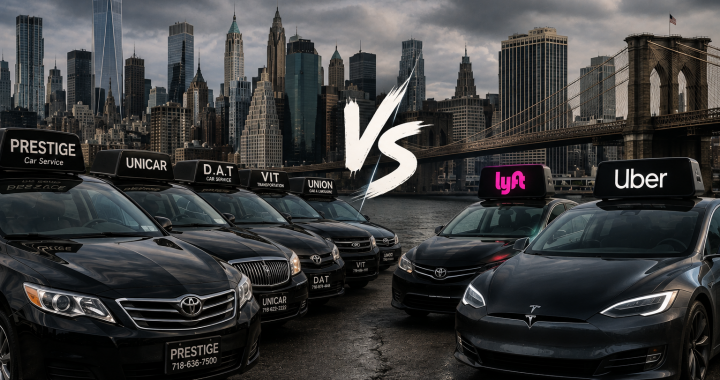
Uber and Lyft vs. NYC’s Traditional Car Service Bases: Free Market or Unfair Competition?

Rideshare apps have dramatically transformed passenger transportation in New York City. Uber and Lyft introduced a fast and convenient way for passengers to request a vehicle, see the cost of a trip before booking, track their driver, and pay directly through a smartphone.

However, the enormous growth of these platforms has also changed the conditions under which New York City’s traditional car service bases must compete.

The question TaxiSocial is raising is simple:

Are the current rules really creating a fair and sustainable competitive environment?

The Problem With Short Trips

For decades, neighborhood car service bases provided transportation throughout New York City, long before Uber and Lyft entered the market.

But operating costs have increased significantly. Commercial insurance, vehicles, maintenance, fuel, labor, technology, and other expenses have forced many traditional bases to raise their minimum fares.

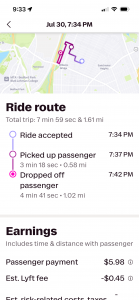
lyft ride

Lyft Ride

A short trip that years ago might have started at around $7 can now have a minimum fare closer to $10 at some traditional bases.

Uber and Lyft, however, can sometimes offer passengers short trips for **$7, $6, or even less**.

And that creates an enormous competitive disadvantage for traditional bases.


Consider a simple example.

A passenger needs a short ride within the neighborhood. A traditional car service quotes $10.

The passenger opens Uber or Lyft and sees a similar trip for $6 or $7.

Which service is the passenger most likely to choose?

The answer is obvious. Consumers naturally look for the best price, especially when the cheaper option also provides door-to-door service, GPS tracking, electronic payment, and the convenience of requesting a vehicle from a smartphone.

The problem isn’t that passengers choose the cheaper service.

The question is how a small neighborhood car service is supposed to compete against companies capable of offering rides at those prices.

Competition With Public Transportation

There is another interesting consequence of these extremely inexpensive short trips.

New York City’s public transportation system charges each passenger individually.

When two or more people are traveling together, there are situations where a short Uber or Lyft ride can approach the combined cost of taking public transportation.

Instead of walking to a subway station or bus stop and paying separately, passengers can be picked up at their door and dropped off directly at their destination.

This means that extremely inexpensive rideshare fares don’t only affect traditional car services.

They can also influence whether some passengers choose public transportation at all.

Traditional Bases Cannot Compete With the Same Tools

Companies such as Prestige, DAT, Unicar, and many other neighborhood car service bases were transporting New Yorkers long before Uber and Lyft arrived.

Many of these companies have modernized. They use computerized dispatching, mobile applications, electronic payments, and other technologies.

But technology alone doesn’t solve the fundamental problem.

A neighborhood base cannot match the scale of Uber and Lyft.

These platforms have massive customer networks, sophisticated pricing systems, enormous amounts of data, and the ability to distribute rides among thousands of drivers.

A small local company simply doesn’t have the same resources.

And when competition becomes primarily a battle over who can offer the cheapest short trip, traditional bases face an extremely difficult situation.

Is This Really a Level Playing Field?

TaxiSocial believes this is a question the New York City Taxi and Limousine Commission should examine carefully.

This isn’t about opposing Uber or Lyft.

And it isn’t about opposing innovation or the free market.

Competition has benefited passengers in many ways.

But government regulations exist partly because unrestricted competition between companies with dramatically different levels of market power can eventually eliminate smaller competitors.

The TLC should examine whether the current regulatory structure allows traditional car service bases and massive rideshare platforms to compete under reasonable conditions.

One issue worth discussing is whether some type of minimum fare structure should apply to very short rides, or whether another regulatory mechanism could prevent extreme pricing disparities between traditional bases and high-volume rideshare platforms.

New York Should Not Wait Until These Bases Disappear

Traditional car service bases have served New York communities for decades.

They continue to provide an important transportation option, particularly for customers who prefer calling a dispatcher, paying cash, dealing with a local company, or simply using a service they have trusted for many years.

But that customer base continues to shrink.

Uber and Lyft changed the industry permanently, and technological progress should not be reversed.

However, modernization doesn’t necessarily have to mean the disappearance of the businesses that served these communities long before rideshare apps existed.

  • New York can have innovation.
  • New York can have competitive prices.
  • New York can have Uber and Lyft.

But New York should also have a transportation market where smaller companies have a realistic opportunity to survive and compete.

Because once local competitors disappear, rebuilding that competition may be extremely difficult.

The question for the TLC, drivers, passengers, and the entire transportation industry is therefore:

Should New York City establish new rules to create a more balanced competitive environment between Uber, Lyft, and traditional car service bases?

Or should the city simply allow the market to decide, even if that ultimately means many traditional bases disappear?

The debate needs to happen before it’s too late.

Massachusetts Uber and Lyft Union

Massachusetts Makes History: Uber and Lyft Face Their Biggest Challenge Yet

The First Statewide Rideshare Drivers’ Union in America Is Now a Reality

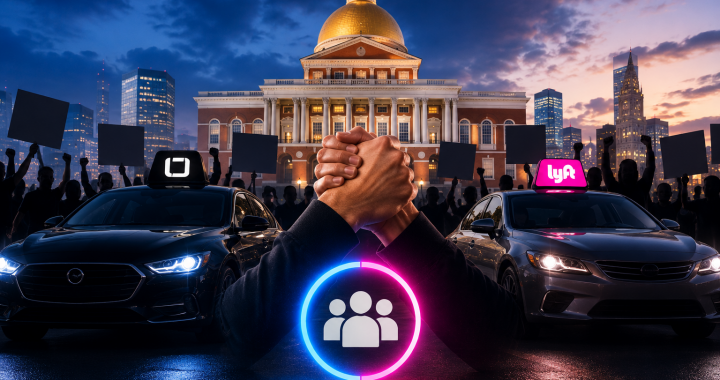
Uber and Lyft drivers in Massachusetts have made history by becoming the first group of rideshare drivers in the United States to gain official state recognition as a union.

The Massachusetts Department of Labor Relations recently certified the App Drivers Union as the representative organization for approximately 70,000 app-based drivers, granting them the authority to engage in collective bargaining with Uber and Lyft.

This unprecedented development could become a turning point for the gig economy and may inspire similar efforts in other states where app-based drivers are seeking greater representation.

The certification follows the approval of Ballot Question 3 by Massachusetts voters in 2024, a measure that granted rideshare drivers the legal right to unionize.

The App Drivers Union, backed by organizations such as the International Association of Machinists and 32BJ SEIU, has stated that its primary goals include improving driver pay, enhancing safety measures, and establishing stronger protections against unfair deactivations.

Industry observers, labor advocates, and rideshare companies across the country are closely watching the outcome, as it could influence the future of app-based work nationwide.>/p>

A Historic Victory for Supporters

Supporters of the union effort view the certification as a major victory for gig workers.

They argue that Uber and Lyft have accumulated significant power through their control of algorithms, pricing systems, and driver deactivation processes, leaving many drivers with limited recourse when disputes arise.

From this perspective, collective bargaining provides drivers with a stronger voice and creates a better balance between large technology companies and the people who provide the service.

Many drivers hope the union will lead to higher earnings, increased transparency, and stronger workplace protections.

The Other Side of the Debate

However, the announcement has also generated concern among many drivers who chose rideshare work specifically because of its independence and flexibility.

Unlike traditional employees, Uber and Lyft drivers are independent contractors. They decide when to work, how many hours to drive, and how much effort they want to invest in generating income.

Millions of drivers originally joined Uber and Lyft as a part-time opportunity to supplement their income. Over time, some discovered they could earn more than they did in traditional jobs and eventually transitioned into full-time driving.

Because of this flexibility, some drivers worry that unionization could gradually push the industry toward a more regulated and less independent model.

Author’s Perspective

In my view, one of the biggest flaws in this debate is the assumption that all drivers have the same goals, work habits, and commitment levels.

The reality is very different.

Some drivers work only a few hours each week for extra income, while others treat rideshare driving as a full-time business. Many experienced drivers learn market patterns, identify the best hours, understand demand cycles, and develop strategies that maximize their earnings.

Not everyone produces the same results or invests the same level of effort.

For that reason, I question whether collective solutions can fairly address the needs of a workforce that is so diverse in terms of commitment, experience, and productivity.

I also believe that most drivers join these platforms fully aware of how the business model works. They understand that earnings are based on time, distance, demand, and platform policies, and they voluntarily choose to participate.

That does not mean the platforms are perfect or beyond criticism. Transparency and accountability are important. However, there is a significant difference between improving the system and fundamentally changing a business model built around independent contracting.

Another concern is the growing political influence that often accompanies unionization efforts.

Historically, labor unions have played an important role in representing workers. At the same time, they have frequently become powerful political organizations capable of influencing legislation and elections.

When an organization represents tens of thousands of people, it inevitably becomes attractive to politicians seeking influence and support.

As a result, some drivers are asking whether future decisions will be driven solely by the interests of drivers or whether broader political agendas may eventually become part of the conversation.

What Happens Next?

Massachusetts has effectively become the nation’s testing ground for the future of app-based work.

If the union successfully improves conditions without reducing the flexibility that drivers value, other states may follow the same path.

However, if the process leads to higher operating costs, reduced opportunities, or increased regulation that limits driver independence, the Massachusetts experiment may serve as a warning rather than a model.

For now, one thing is certain: Uber, Lyft, policymakers, and drivers across the country are watching closely.

The outcome could help shape the future of the gig economy for years to come.

What Do You Think?

Will unionization strengthen drivers’ voices and improve conditions, or could it threaten the flexibility that made rideshare platforms successful in the first place?

Share your thoughts in the comments and follow TaxiSocial for more rideshare news, analysis, and industry updates.

Reclamos choferes - über - Lyft

Why Rideshare Drivers in America Struggle to Win Their Fight Against Uber and Lyft

?Why Rideshare Drivers in America Struggle to Win Their Fight Against Uber and Lyft.

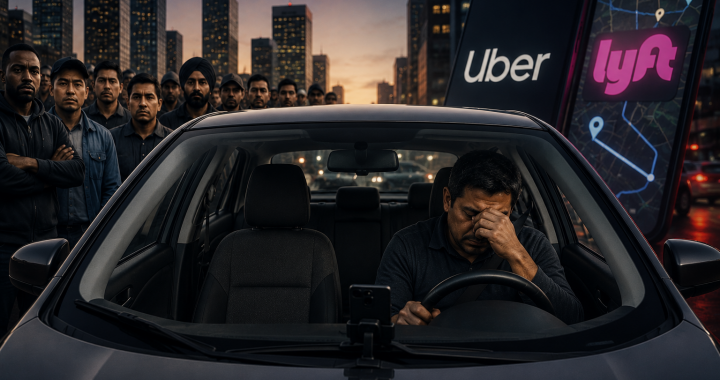
For years, rideshare drivers across the United States have organized protests, strikes, and online campaigns demanding better treatment from companies such as Uber and Lyft. Yet despite these efforts, meaningful changes remain difficult to achieve.

The problem is not simply the power of the rideshare companies. One of the biggest obstacles is the lack of unity among drivers themselves. Cultural differences, economic realities, government regulations, and algorithmic control all contribute to making collective action extremely difficult.

Different Cultures, Different Priorities

The American rideshare workforce is one of the most diverse labor groups in the country. Drivers come from Africa, Asia, Europe, the Caribbean, Central America, South America, and many other regions of the world.

While diversity is one of America’s greatest strengths, it can also create challenges when drivers attempt to organize around common goals.

Many immigrant drivers support families not only in the United States but also in their countries of origin. However, the cost of living varies dramatically from one country to another. For some drivers, the income generated through Uber and Lyft is more than enough to support their families abroad. For others, especially those supporting relatives in higher-cost regions, the financial pressure is much greater.

As a result, drivers often have very different expectations regarding what constitutes fair pay. When calls for strikes or protests arise, many drivers choose not to participate because they are satisfied with their current earnings. This weakens collective bargaining efforts and makes it easier for the platforms to ignore driver complaints.

The Problem of Expectations

When Uber and Lyft first entered the market, drivers enjoyed exceptionally high earnings. There were fewer vehicles on the road, less competition, and fewer restrictions imposed by platform algorithms.

Drivers could work as many hours as they wished and often earned significantly more than the average worker in many professions.

Over time, however, the industry changed. More drivers joined the platforms, competition increased, and sophisticated algorithms began controlling ride distribution and earnings opportunities.

Many drivers compare today’s income levels to those early years and feel disappointed. While earnings have certainly declined in many markets, part of the frustration comes from expectations formed during a period that may never return.

Government Intervention and the Equalization Effect

In New York City, the Taxi and Limousine Commission (TLC) introduced regulations designed to guarantee minimum hourly earnings for rideshare drivers.

While policymakers view these rules as a victory for workers, many drivers believe the regulations have produced unintended consequences.

According to numerous drivers, ride assignment algorithms now prioritize income equalization among drivers. In practice, this means a driver who has already earned above a certain threshold may receive fewer ride requests, while another driver receives priority.

Many drivers report situations where they are physically closer to a passenger but do not receive the trip because the algorithm is attempting to balance earnings across the driver network.

Critics argue that this system discourages experience, strategy, and efficiency. Whether a driver is highly skilled or completely new to the business, the algorithm increasingly influences earning opportunities.

The Real Issues Drivers Should Be Fighting For

While many drivers focus primarily on fares and pay rates, there are other concerns that may be even more important.

One of the most significant issues is transparency.

Many drivers are required to accept ride requests without having access to complete information about the trip. Refusing too many rides can reduce acceptance rates and may result in the loss of certain platform privileges.

Drivers should have the right to know key details about a trip before accepting it. This information is essential for planning their day, managing fuel costs, scheduling family obligations, and deciding which areas they want to work in.

A driver may need to pick up a child from school, meet a spouse after work, or remain within a particular neighborhood. Yet by accepting trips without full information, they can find themselves 30 or 40 miles away from where they intended to be.

In many cases, the lack of trip transparency costs drivers more money in fuel, tolls, and unpaid return miles than a small fare increase would compensate for.

Many people enter rideshare driving seeking flexibility and independence. Ironically, some end up feeling controlled by algorithms that dictate where they work, when they work, and how much information they are allowed to see.

Conclusion

The challenges facing rideshare drivers in America go far beyond hourly pay.

Cultural differences, conflicting economic interests, government regulations, and platform algorithms all contribute to a fragmented workforce that struggles to organize effectively.

If drivers hope to achieve meaningful reforms, they may need to focus less on short-term fare increases and more on transparency, freedom of choice, and the right to make informed decisions about their work.

Until then, Uber and Lyft will likely continue to maintain the upper hand in the ongoing debate over the future of rideshare driving in America.