The First Statewide Rideshare Drivers’ Union in America Is Now a Reality
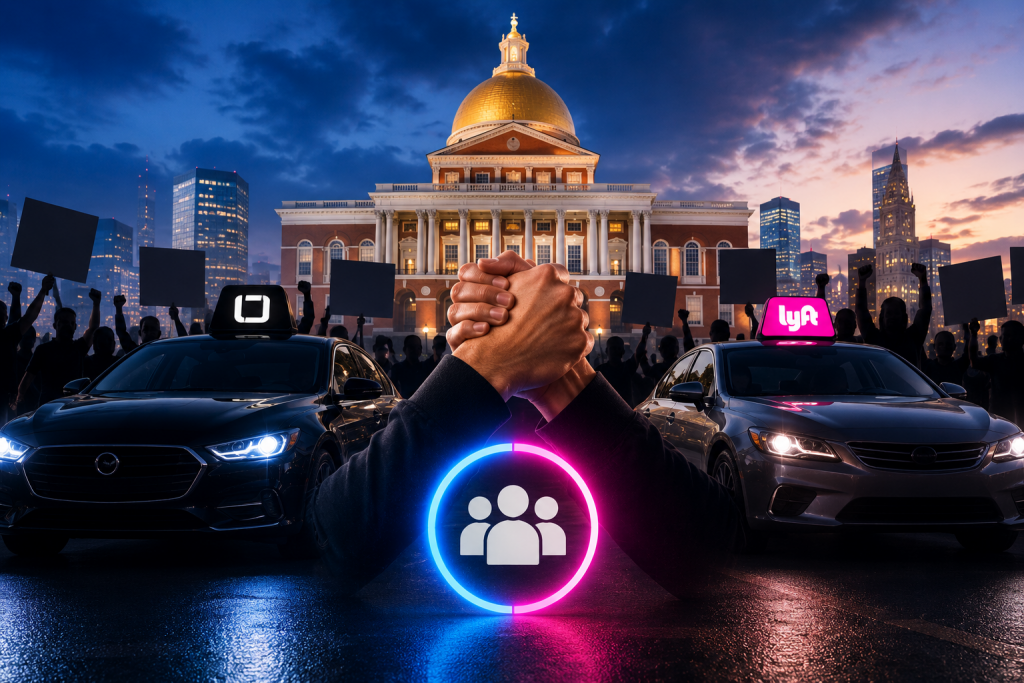
Uber and Lyft drivers in Massachusetts have made history by becoming the first group of rideshare drivers in the United States to gain official state recognition as a union.
The Massachusetts Department of Labor Relations recently certified the App Drivers Union as the representative organization for approximately 70,000 app-based drivers, granting them the authority to engage in collective bargaining with Uber and Lyft.
This unprecedented development could become a turning point for the gig economy and may inspire similar efforts in other states where app-based drivers are seeking greater representation.
The certification follows the approval of Ballot Question 3 by Massachusetts voters in 2024, a measure that granted rideshare drivers the legal right to unionize.
The App Drivers Union, backed by organizations such as the International Association of Machinists and 32BJ SEIU, has stated that its primary goals include improving driver pay, enhancing safety measures, and establishing stronger protections against unfair deactivations.
Industry observers, labor advocates, and rideshare companies across the country are closely watching the outcome, as it could influence the future of app-based work nationwide.>/p>
A Historic Victory for Supporters
Supporters of the union effort view the certification as a major victory for gig workers.
They argue that Uber and Lyft have accumulated significant power through their control of algorithms, pricing systems, and driver deactivation processes, leaving many drivers with limited recourse when disputes arise.
From this perspective, collective bargaining provides drivers with a stronger voice and creates a better balance between large technology companies and the people who provide the service.
Many drivers hope the union will lead to higher earnings, increased transparency, and stronger workplace protections.
The Other Side of the Debate
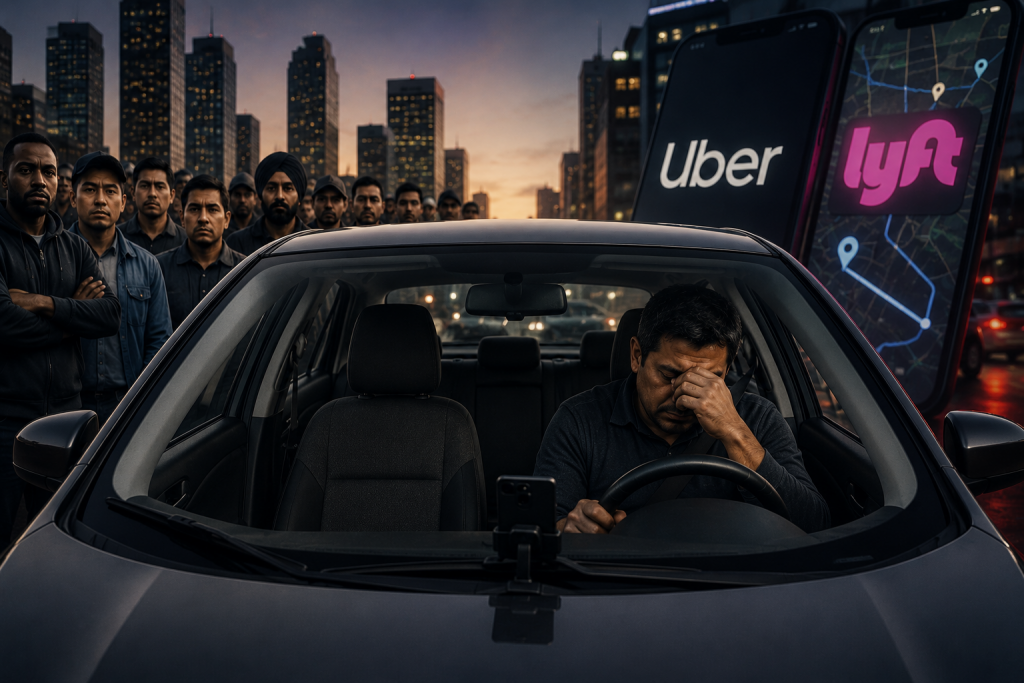
However, the announcement has also generated concern among many drivers who chose rideshare work specifically because of its independence and flexibility.
Unlike traditional employees, Uber and Lyft drivers are independent contractors. They decide when to work, how many hours to drive, and how much effort they want to invest in generating income.
Millions of drivers originally joined Uber and Lyft as a part-time opportunity to supplement their income. Over time, some discovered they could earn more than they did in traditional jobs and eventually transitioned into full-time driving.
Because of this flexibility, some drivers worry that unionization could gradually push the industry toward a more regulated and less independent model.
Author’s Perspective
In my view, one of the biggest flaws in this debate is the assumption that all drivers have the same goals, work habits, and commitment levels.
The reality is very different.
Some drivers work only a few hours each week for extra income, while others treat rideshare driving as a full-time business. Many experienced drivers learn market patterns, identify the best hours, understand demand cycles, and develop strategies that maximize their earnings.
Not everyone produces the same results or invests the same level of effort.
For that reason, I question whether collective solutions can fairly address the needs of a workforce that is so diverse in terms of commitment, experience, and productivity.
I also believe that most drivers join these platforms fully aware of how the business model works. They understand that earnings are based on time, distance, demand, and platform policies, and they voluntarily choose to participate.
That does not mean the platforms are perfect or beyond criticism. Transparency and accountability are important. However, there is a significant difference between improving the system and fundamentally changing a business model built around independent contracting.
Another concern is the growing political influence that often accompanies unionization efforts.
Historically, labor unions have played an important role in representing workers. At the same time, they have frequently become powerful political organizations capable of influencing legislation and elections.
When an organization represents tens of thousands of people, it inevitably becomes attractive to politicians seeking influence and support.
As a result, some drivers are asking whether future decisions will be driven solely by the interests of drivers or whether broader political agendas may eventually become part of the conversation.
What Happens Next?
Massachusetts has effectively become the nation’s testing ground for the future of app-based work.
If the union successfully improves conditions without reducing the flexibility that drivers value, other states may follow the same path.
However, if the process leads to higher operating costs, reduced opportunities, or increased regulation that limits driver independence, the Massachusetts experiment may serve as a warning rather than a model.
For now, one thing is certain: Uber, Lyft, policymakers, and drivers across the country are watching closely.
The outcome could help shape the future of the gig economy for years to come.
What Do You Think?
Will unionization strengthen drivers’ voices and improve conditions, or could it threaten the flexibility that made rideshare platforms successful in the first place?
Share your thoughts in the comments and follow TaxiSocial for more rideshare news, analysis, and industry updates.