new cameras

Attention Uber & Lyft Drivers! Starting June 30, These New Cameras Could Automatically Ticket You.

Attention Uber & Lyft Drivers! Starting June 30, These New Cameras Could Automatically Ticket You

If you drive for Uber, Lyft, a taxi, or simply travel frequently throughout New York City, you should be aware of one of the most significant traffic enforcement changes taking effect this year.

Beginning June 30, the Metropolitan Transportation Authority (MTA) started activating a new speed camera enforcement system across several of its transportation facilities. These cameras are designed to automatically detect speeding vehicles and issue citations without requiring a police officer to be present.

For thousands of drivers who cross New York City’s bridges and tunnels every day, this new enforcement system could lead to more speeding tickets if driving habits are not adjusted.

What Are These New Cameras?

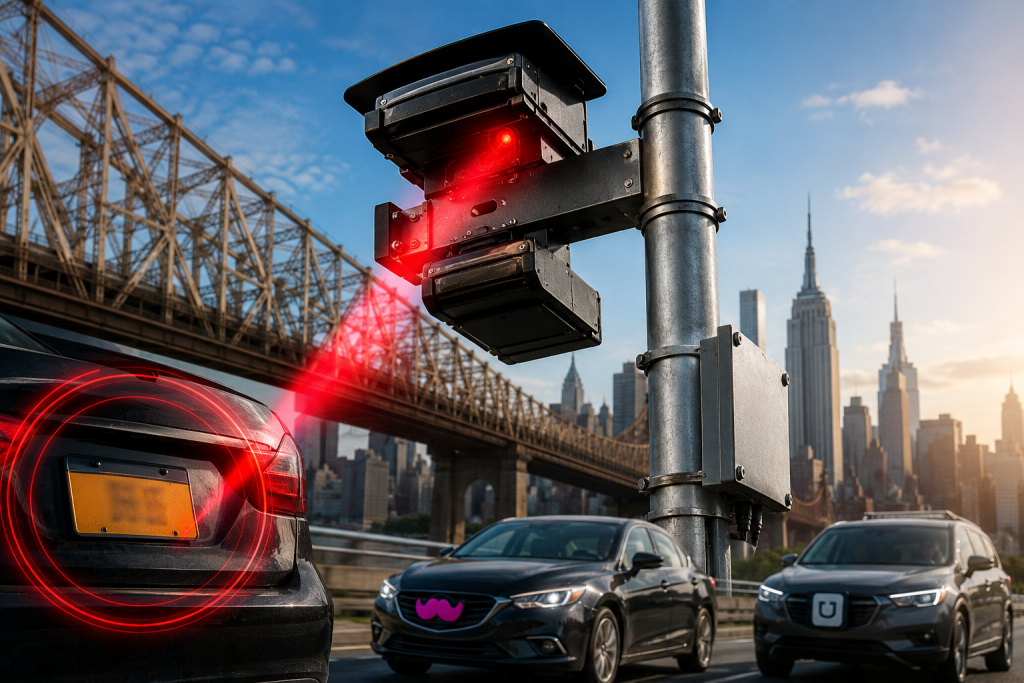
Unlike traditional traffic cameras already found throughout New York City, this new system uses advanced electronic equipment mounted on tall metal poles at strategic locations across MTA-operated infrastructure.

Each unit is equipped with sensors and high-resolution cameras capable of measuring vehicle speeds. When a vehicle exceeds the posted speed limit, the system automatically records the violation and captures images of the vehicle’s license plate.

The information is then processed through the enforcement program, and a citation is mailed to the registered owner of the vehicle.

The entire process is fully automated.

Where Are They Located?

The new cameras are being installed throughout MTA-operated infrastructure, including bridges, tunnels, and major access roadways.

Many of these locations are traveled daily by Uber, Lyft, taxi, delivery, and commercial drivers, meaning transportation professionals could pass these cameras multiple times during a single workday.

How Will They Affect Uber and Lyft Drivers?

For the average driver, a speeding ticket is an unexpected expense.

For rideshare drivers, however, the financial impact can be much greater.

Most Uber and Lyft drivers spend between eight and twelve hours behind the wheel each day and complete dozens of trips every week.

Trying to make up lost time or complete additional rides may tempt some drivers to exceed the speed limit by just a few miles per hour.

With this new enforcement system, even a small speeding violation could result in a ticket that directly reduces a driver’s daily earnings.

Drivers who lease vehicles or work through fleet owners should also understand who is responsible for paying traffic citations, since tickets are generally mailed to the registered owner of the vehicle.

How Does the System Work?

The enforcement process is completely automated.

First, the sensors measure the speed of every passing vehicle.

If a vehicle exceeds the posted speed limit, the cameras capture images of its license plate.

The recorded information is then reviewed through the enforcement program, and if a violation is confirmed, a citation is mailed to the registered owner.

No police officer needs to stop the driver for a ticket to be issued.

Why Is the MTA Implementing This System?

According to transportation officials, the primary goal is to improve roadway safety and reduce crashes caused by excessive speeding.

The agency expects the program to reduce speeding, lower accident rates, improve safety for motorists and workers, and increase compliance with posted speed limits through automated enforcement.

The MTA says excessive speed continues to be one of the leading causes of serious traffic crashes throughout New York.

What Should Drivers Do?

The best advice is simple: always obey the posted speed limits.

Saving a few seconds is never worth receiving a speeding ticket that could significantly reduce your earnings.

Pay close attention to speed limit signs while driving through bridges, tunnels, and roadways operated by the MTA, especially if you work as an Uber or Lyft driver.

Driving safely not only helps you avoid expensive fines, but also protects everyone sharing the road.

Conclusion

The activation of these new speed cameras represents another major step in New York City’s continued expansion of automated traffic enforcement.

While transportation officials argue that the program will improve public safety, many professional drivers believe it could result in more tickets and additional financial pressure for those who depend on driving for a living.

One thing is certain: beginning June 30, drivers should pay much closer attention to posted speed limits whenever traveling through MTA-operated bridges, tunnels, and other transportation facilities.

What Do You Think?

Do you believe these new speed cameras will make New York’s roads safer, or do you think they will simply become another source of revenue for the city? Let us know your thoughts in the comments below.

Follow Taxisocial

If you’re an Uber, Lyft, taxi, or commercial driver in New York City, subscribe to our channel and share this article with fellow drivers. We regularly publish news, regulation updates, safety tips, and industry analysis to help you stay informed and avoid costly traffic tickets.

Massachusetts Uber and Lyft Union

Massachusetts Makes History: Uber and Lyft Face Their Biggest Challenge Yet

The First Statewide Rideshare Drivers’ Union in America Is Now a Reality

Uber and Lyft drivers in Massachusetts have made history by becoming the first group of rideshare drivers in the United States to gain official state recognition as a union.

The Massachusetts Department of Labor Relations recently certified the App Drivers Union as the representative organization for approximately 70,000 app-based drivers, granting them the authority to engage in collective bargaining with Uber and Lyft.

This unprecedented development could become a turning point for the gig economy and may inspire similar efforts in other states where app-based drivers are seeking greater representation.

The certification follows the approval of Ballot Question 3 by Massachusetts voters in 2024, a measure that granted rideshare drivers the legal right to unionize.

The App Drivers Union, backed by organizations such as the International Association of Machinists and 32BJ SEIU, has stated that its primary goals include improving driver pay, enhancing safety measures, and establishing stronger protections against unfair deactivations.

Industry observers, labor advocates, and rideshare companies across the country are closely watching the outcome, as it could influence the future of app-based work nationwide.>/p>

A Historic Victory for Supporters

Supporters of the union effort view the certification as a major victory for gig workers.

They argue that Uber and Lyft have accumulated significant power through their control of algorithms, pricing systems, and driver deactivation processes, leaving many drivers with limited recourse when disputes arise.

From this perspective, collective bargaining provides drivers with a stronger voice and creates a better balance between large technology companies and the people who provide the service.

Many drivers hope the union will lead to higher earnings, increased transparency, and stronger workplace protections.

The Other Side of the Debate

However, the announcement has also generated concern among many drivers who chose rideshare work specifically because of its independence and flexibility.

Unlike traditional employees, Uber and Lyft drivers are independent contractors. They decide when to work, how many hours to drive, and how much effort they want to invest in generating income.

Millions of drivers originally joined Uber and Lyft as a part-time opportunity to supplement their income. Over time, some discovered they could earn more than they did in traditional jobs and eventually transitioned into full-time driving.

Because of this flexibility, some drivers worry that unionization could gradually push the industry toward a more regulated and less independent model.

Author’s Perspective

In my view, one of the biggest flaws in this debate is the assumption that all drivers have the same goals, work habits, and commitment levels.

The reality is very different.

Some drivers work only a few hours each week for extra income, while others treat rideshare driving as a full-time business. Many experienced drivers learn market patterns, identify the best hours, understand demand cycles, and develop strategies that maximize their earnings.

Not everyone produces the same results or invests the same level of effort.

For that reason, I question whether collective solutions can fairly address the needs of a workforce that is so diverse in terms of commitment, experience, and productivity.

I also believe that most drivers join these platforms fully aware of how the business model works. They understand that earnings are based on time, distance, demand, and platform policies, and they voluntarily choose to participate.

That does not mean the platforms are perfect or beyond criticism. Transparency and accountability are important. However, there is a significant difference between improving the system and fundamentally changing a business model built around independent contracting.

Another concern is the growing political influence that often accompanies unionization efforts.

Historically, labor unions have played an important role in representing workers. At the same time, they have frequently become powerful political organizations capable of influencing legislation and elections.

When an organization represents tens of thousands of people, it inevitably becomes attractive to politicians seeking influence and support.

As a result, some drivers are asking whether future decisions will be driven solely by the interests of drivers or whether broader political agendas may eventually become part of the conversation.

What Happens Next?

Massachusetts has effectively become the nation’s testing ground for the future of app-based work.

If the union successfully improves conditions without reducing the flexibility that drivers value, other states may follow the same path.

However, if the process leads to higher operating costs, reduced opportunities, or increased regulation that limits driver independence, the Massachusetts experiment may serve as a warning rather than a model.

For now, one thing is certain: Uber, Lyft, policymakers, and drivers across the country are watching closely.

The outcome could help shape the future of the gig economy for years to come.

What Do You Think?

Will unionization strengthen drivers’ voices and improve conditions, or could it threaten the flexibility that made rideshare platforms successful in the first place?

Share your thoughts in the comments and follow TaxiSocial for more rideshare news, analysis, and industry updates.

Tools drivers issues

Rideshare Drivers Under Pressure: NJ and NY Toll Enforcement Fines Uber & Lyft Drivers for Low E-ZPass Balances

Uber and Lyft drivers operating between New York and New Jersey are facing increasing financial pressure due to new toll enforcement measures implemented by regional transportation authorities. What was once an occasional inconvenience has now become a costly problem: drivers are being fined $50 each time they cross a toll without sufficient funds in their E-ZPass accounts**—even when the crossing happens while transporting passengers.

A Growing Problem for Cross-State Drivers

Many rideshare drivers regularly travel between NYC and New Jersey, especially through heavily used crossings such as:

  • George Washington Bridge
  • Lincoln Tunnel
  • Holland Tunnel
  • NJ Turnpike toll roads

With the rise of cashless tolling systems, toll agencies now rely entirely on E-ZPass or license-plate billing. Under the new enforcement approach, if a driver’s E-ZPass balance is too low at the moment of crossing, the system automatically flags the transaction and issues a $50 violation, particularly on the New Jersey side.

For drivers who make multiple crossings in a single day, these fines can **add up quickly**, sometimes reaching hundreds of dollars in a single week.

Why Drivers Are Being Hit So Hard

Several factors make rideshare drivers especially vulnerable to these fines:

  1. Inconsistent Earnings
  2. Delayed Toll Reimbursements
  3. While Uber and Lyft often charge passengers for tolls, reimbursements to drivers are not always immediate. In some cases, drivers report tolls being added to fares after the trip, while the toll authority requires payment instantly.

  4. Lack of Real-Time Alerts
  5. Many drivers are not notified in real time when their E-ZPass balance runs low. By the time they realize it, the fine has already been issued.

  6. No Grace Period

Under the new enforcement rules, there is little to no grace period for low balances. Even a shortfall of a few dollars can trigger the full $50 penalty.

Financial Impact on Drivers

For independent contractors already dealing with:

  • High fuel costs
  • Vehicle maintenance
  • Insurance expenses
  • Platform service fees

These toll fines feel like an unfair additional tax on working drivers.

Some drivers argue that the policy disproportionately affects low-income and full-time rideshare drivers, who may cross tolls multiple times per shift just to meet passenger demand.

Calls for Reform and Better Coordination

Drivers and advocacy groups are increasingly calling for:

  • Better coordination between Uber, Lyft, and toll authorities
  • Automatic toll balance alerts
  • Grace periods for low E-ZPass balances
  • Fine reductions for first-time or low-balance violations
  • Integrated toll management directly within driver apps

Many believe that if rideshare platforms depend on toll crossings to operate efficiently, they should also play a larger role in preventing drivers from being penalized.

What Drivers Can Do Right Now

Until changes are made, drivers are advised to:

  • Monitor E-ZPass balances daily
  • Enable auto-replenishment with a higher minimum balance
  • Keep records of toll reimbursements from Uber and Lyft
  • Dispute fines when tolls were incurred during active trips

Final Thoughts

The new toll enforcement measures in New York and New Jersey highlight a growing disconnect between modern Rideshare work and traditional transportation policies. While cities aim to modernize toll collection and enforcement, the burden is increasingly falling on drivers who are simply trying to earn a living.

Without reforms or better integration, these $50 fines risk pushing many drivers further into financial strain—raising serious questions about fairness, accountability, and the future of rideshare work in the region.

congestion pricing

How NYC’s Congestion Pricing Could Save Uber and Lyft Riders Money.

Navigating New York City’s streets has always been a challenge, both for drivers and passengers. The relentless congestion, characterized by bumper-to-bumper traffic and sluggish movement, has often turned short rides into expensive and time-consuming ordeals for Uber and Lyft users. With the implementation of NYC’s congestion pricing, a new chapter is unfolding for rideshare services in the city.

While some see the added fee for trips into designated areas as another burden, there’s more to this policy than meets the eye. This measure aims to reduce traffic jams and create smoother, more efficient travel throughout the city. Surprisingly, the change could actually save customers money in the long run. By improving traffic flow, rideshare trips become quicker and potentially less costly, even when factoring in the additional charge.

In this article, we’ll explore the effects of congestion pricing on both passengers and drivers, highlighting how this initiative is reshaping the streets of New York City. We’ll discuss why smoother traffic translates to savings, how drivers are adapting to the change, and the broader benefits for everyone on the road. Let’s dive in and uncover why NYC’s congestion pricing may be a game-changer for rideshare users.

Congestion pricing applies an additional fee to rideshare trips entering designated high-traffic areas, particularly in Manhattan. At first glance, this might seem like another financial strain for passengers, but the measure is doing more than just collecting revenue—it’s actively changing how traffic flows in the city. By discouraging unnecessary trips and reducing the number of vehicles on the road, congestion pricing is helping to smooth out traffic, making rides shorter and, in some cases, more cost-effective.

For rideshare users, the connection between congestion and fare prices is significant. Before congestion pricing, passengers often paid higher fares for trips that took much longer than expected, even when traveling just a couple of miles. This wasn’t because the distance was far, but because the vehicles were trapped in near-standstill traffic. With congestion easing, rides are taking less time, and customers are reaping the benefits of faster, more predictable travel times, even with the added surcharge.

Drivers, too, are seeing changes, albeit with mixed reactions. The additional fee has raised concerns about losing customers, but many drivers are finding that smoother traffic allows them to complete more trips per hour. Spending less time stuck on crowded streets means more opportunities to pick up new passengers, which can offset the challenges of the surcharge. Additionally, the reduced wear and tear on vehicles and lower fuel costs from idling less are hidden perks that some drivers are beginning to notice.

Beyond the impact on fares, the broader effects of congestion pricing are transforming New York City’s streets. The once-chaotic traffic in parts of Manhattan has begun to flow more freely, creating a calmer and more accessible environment for everyone. Cyclists, pedestrians, and public transit users are also benefiting from the reduction in gridlock. What started as a policy to reduce congestion is evolving into a comprehensive improvement in urban mobility, making the city a better place for all its inhabitants a better place for all its inhabitants and Uber and Lyft users save time and money while traveling into city.

über Lyft war

Ride-Share Wars: A Comparison of Uber, Lyft, and Other Competitors in the USA

The ride-sharing industry has dramatically transformed how Americans commute, offering an affordable and convenient alternative to traditional taxis. Uber and Lyft dominate this market, but other players are emerging, offering unique services and pricing strategies. This article compares Uber, Lyft, and their competitors, examining their strengths, weaknesses, and how they stack up against each other.

UBER: The Pioneer and Market Leader

Uber, founded in 2009, is synonymous with ride-sharing. With a presence in over 10,000 cities worldwide, it is known for:

Pros:
  • Wide availability in urban and suburban areas.
  • Features like UberX, Uber Comfort, Uber Black, and UberPool cater to various budgets and preferences.
  • A robust app interface with real-time tracking and upfront pricing.
Cons :
  • Surge pricing can make rides expensive during peak hours.
  • Drivers often express concerns about declining earnings and lack of benefits.

Lyft: Uber’s Closest Competitor

Lyft, launched in 2012, is often considered the more community-focused alternative to Uber. Over the years, it has built a reputation for being both rider- and driver-friendly, while offering a feature-rich app experience.

Pros:

A more driver-friendly reputation with integrated tipping options.

Competitive pricing, often slightly cheaper than Uber.

App Transparency: Lyft’s app is widely regarded as more complete than Uber’s, providing both riders and drivers with more detailed trip information. For drivers, this includes trip distance, estimated earnings, and destination details before accepting a ride.

Commitment to sustainability through initiatives like electric vehicle incentives.

Cons:

Fewer service tiers compared to Uber.

Limited availability in smaller cities and rural areas.

Regional and Niche Competitors

Beyond Uber and Lyft, several smaller competitors cater to specific needs or regions:

Via : Focuses on shared rides and is popular in cities like New York and Chicago.

  • Emphasis on cost efficiency through ride-pooling.
  • Limited service areas.

Curb: Partners with local taxi fleets to integrate traditional cabs into the ride-sharing model.

  • Familiarity for riders used to taxis.
  • Less tech-savvy than app-native platforms.

Wingz : Specializes in pre-scheduled rides, particularly to airports.

  • Reliable for planning ahead.
  • Lack of on-demand availability.

Key Factors for Riders to Consider

When choosing a ride-share service, passengers should evaluate:

  • Pricing: Comparing rates during peak and non-peak hours.
  • Availability: Which service operates in your area?
  • Features: Preferences like ride-pooling, luxury options, or scheduled rides.
  • Sustainability: Eco-conscious riders may favor platforms with electric or hybrid fleets.

Drivers’ Perspective: Earnings and Policies

Ride-share drivers are the backbone of these platforms, and their experience varies:

Earnings:Both Uber and Lyft use dynamic pricing models, but driver pay has been a contentious issue, with rates often dependent on location and demand.

Flexibility:Most platforms emphasize the ability to work on your own schedule.

Support and Benefits: Companies like Lyft have made strides in offering limited perks, but independent contractor status remains a sticking point.

Conclusion

The ride-sharing wars are far from over. Uber and Lyft dominate the market, but regional players like Via and niche services like Wingz are carving out their space. For passengers and drivers alike, the competition fosters innovation and forces companies to refine their services. Choosing the right platform often depends on personal priorities—be it affordability, convenience, or sustainability.