Self-Driving Taxis Hit NYC Streets — What This Means for Riders and Drivers

New York City, long known for its iconic yellow cabs and bustling ride-share services, has entered a new chapter in urban transportation: the testing of self-driving taxis. As autonomous vehicles begin rolling through the city’s complex and congested streets, both riders and drivers are left wondering how this innovation will reshape daily travel, the ride-hailing industry, and the broader economy.

What Riders Can Expect

For passengers, self-driving taxis promise a mix of convenience, efficiency, and uncertainty. Riders may benefit from:

* **Lower Fares Over Time**: Without the need for a human driver, operating costs may drop, potentially reducing ride prices in the future.

* **Consistency in Service**: Autonomous vehicles don’t tire, need breaks, or cancel rides, potentially making service more reliable.

* **Mixed Comfort Levels**: While some riders may be excited to step into a car driven by AI, others may hesitate, questioning safety and comfort.

Early trials in NYC suggest that self-driving taxis will be closely monitored, with safety operators onboard to intervene if needed. Riders may experience smoother traffic navigation in some areas, but the unpredictable nature of pedestrians, cyclists, and dense traffic will still test the technology’s limits.

What This Means for Drivers

The biggest question surrounding autonomous ride-share services is their impact on human drivers:

Job Security Concerns: Ride-share and taxi drivers worry about being replaced as companies push toward automation.

New Roles Emerging: At the same time, opportunities may open in fleet management, vehicle supervision, maintenance, and customer service.

Gradual Transition: Experts believe human drivers won’t disappear overnight. Regulations, public acceptance, and technical challenges mean the rollout will be slow and partial.

In the short term, drivers may even benefit from reduced congestion if self-driving taxis prove more efficient in routing and traffic handling.

The Bigger Picture for NYC

Beyond riders and drivers, the arrival of autonomous ride-share vehicles could bring larger societal changes:

Traffic Flow Improvements : AI-driven cars may help reduce gridlock by following optimized routes and maintaining consistent speeds.

Environmental Benefits : Many autonomous fleets are electric, aligning with NYC’s climate goals.

Regulatory Hurdles : New York State and city regulators are proceeding cautiously, requiring strict safety testing before large-scale deployment.

Conclusion

The launch of self-driving taxis in New York City is more than just a technological milestone—it’s a signal of how urban life could transform in the coming years. For riders, it could mean cheaper and more reliable transport. For drivers, it sparks both uncertainty and new opportunities. And for the city itself, it offers a test of how cutting-edge technology integrates with one of the busiest, most unpredictable urban environments in the world.

Whether New Yorkers embrace or resist this change, one thing is clear: the streets of NYC are entering an era where technology and tradition will ride side by side.
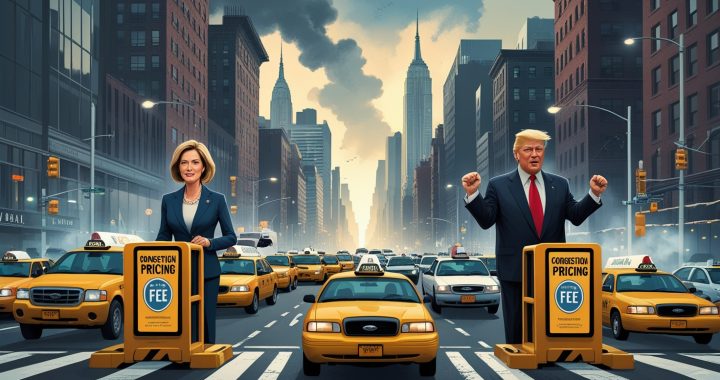
congestion fee battle

The Battle Over Congestion Pricing in New York: Populism vs. Policy

The implementation of the congestion pricing toll system for drivers entering the center of Manhattan has sparked a fierce battle between two major political figures: President Donald Trump and New York Governor Kathy Hochul.

This conflict resembles a wrestling match between two opposing sides: one favoring order and sustainable urban planning, and the other driven by populist rhetoric. It is essential to analyze this situation beyond political affiliations and focus on what truly benefits New York City.

The Purpose of Congestion Pricing

The congestion pricing toll, designed to reduce environmental pollution and alleviate traffic congestion in New York City, also aims to generate revenue for much-needed improvements to the city’s deteriorating public transportation infrastructure.

However, President Trump and his administration argue that such a toll would disadvantage the city compared to other regions, leading businesses to relocate to states with fewer restrictions.

The Political Clash

Trump’s administration withdrew federal approval for New York’s congestion pricing program, claiming that it disproportionately impacts middle-class workers and does not effectively support road infrastructure. This decision was met with polarized reactions. New Jersey Governor Phil Murphy praised it as a win for drivers, while others condemned it as a political maneuver to undermine New York’s ability to manage its own affairs.

Trump’s populist approach was evident in his statement on Truth Social, where he declared, “Congestion Pricing is DEAD! Manhattan and all of New York are SAVED. LONG LIVE THE KING!”—a theatrical move that further fueled the debate.

Hochul’s Response

In response, Governor Hochul traveled to Washington, D.C., for an official meeting with Trump in the Oval Office. Their discussion covered a range of topics, including immigration, infrastructure, economic development, and renewable energy. During the meeting, Hochul presented Trump with a booklet showcasing the early successes of congestion pricing in reducing traffic and emissions.

The Federal Funding Dilemma

One of the most pressing concerns for New York’s Metropolitan Transportation Authority (MTA) is the potential loss of federal funding due to the Trump administration’s decision. Federal funds are crucial for maintaining and expanding public transportation systems across the country, and withholding them from New York could set a dangerous precedent.

Kate Slevin, Executive Vice President of the Regional Plan Association, emphasized that “all state transportation agencies rely on federal funds,” with only a few exceptions. If the federal government continues to use funding as leverage against state policies, other states might face similar challenges in the future.

The Future of Congestion Pricing

Despite political interference, congestion pricing remains active in New York City. However, public opinion remains divided on whether the program should continue. While some see it as a necessary step towards a more sustainable and efficient city, others believe it imposes an unfair burden on middle-class drivers.

Ultimately, the decision should be based on data and long-term benefits rather than short-term political gains. New Yorkers, who experience the city’s transportation challenges firsthand, should have the final say in shaping policies that directly affect their daily lives. The federal government should respect the autonomy of states in managing their urban planning initiatives without unnecessary intervention.