nye new low for delivery apps

New York City Expands Delivery Worker Protections: Minimum Pay, Tips and New Rules for Delivery Apps

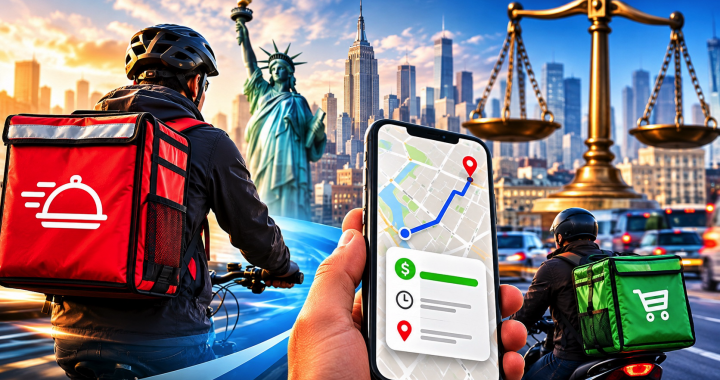
New York City continues to expand its regulation of app-based delivery companies. During 2026, new protections took effect affecting workers using platforms such as Uber Eats, DoorDash, Grubhub, Instacart and Shipt.

The measures go well beyond establishing a minimum pay rate. They also address tipping, pay transparency, information provided before accepting certain deliveries and protections covering different categories of delivery workers.

$22.13 Minimum Pay Rate

As of April 2026, New York City’s minimum pay rate for covered workers is $22.13 per hour, before tips.

Tips are additional and cannot be used by companies to satisfy the city’s minimum pay requirement.

However, there is an important distinction.

A “$22.13 per hour” minimum rate does not necessarily mean that every worker receives $22.13 multiplied by every hour they remain logged into an app.

Trip Time and On-Call Time

New York City’s rules distinguish between different types of working time.

One is trip time, which relates to time spent preparing and completing deliveries.

The regulations also address on-call time, covering certain periods when workers are available to receive orders.

Platforms can use specific methods established by the city to demonstrate compliance with minimum pay requirements.

As a result, calculating a worker’s compensation can be considerably more complicated than simply multiplying all logged-in hours by $22.13.

Instacart and Shipt

One of the most significant changes in 2026 involves grocery delivery.

Workers using platforms such as Instacart and Shipt are now covered by minimum pay protections applicable to this sector.

Following a transition period during the first half of 2026, additional compensation requirements took effect beginning in July.

This could have important consequences for workers.

When keeping workers available while waiting for orders creates additional financial obligations for a platform, companies have an incentive to reduce excessive waiting periods.

That could lead to changes in algorithms, restrictions on when workers can log in, or controls on the number of workers allowed to remain available at the same time.

New Tipping Rules

Restaurant and grocery delivery platforms must provide customers with an opportunity to tip before or at the time they place their order.

Among the options displayed to customers, there must be an option of at least 10% of the purchase price.

Customers remain free to choose another amount.

The rule follows a major controversy involving how some platforms changed their tipping interfaces.

According to an analysis published by New York City, changes made by Uber Eats and DoorDash were associated with workers receiving more than $550 million less in tips.

The new requirements are intended to prevent app interfaces from unnecessarily discouraging customers from tipping.

More Transparency for Workers

The protections also attempt to address the lack of information that has historically characterized app-based work.

Depending on the type of service, workers must receive relevant information before accepting certain deliveries.

That information can include the pickup address, estimated time, estimated distance, pay and information concerning the tip.

Companies must also pay workers at least weekly and provide detailed pay statements allowing workers to better understand how their compensation was calculated.

Bathroom Access

New York City has also strengthened protections concerning delivery workers’ access to bathrooms at businesses where they pick up orders, subject to limited health and safety exceptions.

The city even provides an official bathroom-access card that workers can keep on their phones and present when necessary.

The Bigger Impact of the New Rules

The new protections represent a significant change for thousands of delivery workers.

But evaluating the rules solely by looking at the $22.13 per hour figure misses an important part of the story.

One of the issues TaxiSocial will be watching closely is how platforms respond to requirements involving workers’ availability and waiting time.

Companies could change the number of workers allowed online, their order-assignment systems, scheduling practices or the algorithms they use to reduce unproductive time.

The real test, therefore, will be how Uber Eats, DoorDash, Instacart, Shipt and other platforms modify their operations — and what those changes ultimately mean for workers’ earnings and flexibility.

TaxiSocial will continue monitoring these changes and their real-world impact on New York City’s delivery workers.
Free Market or Unfair Competition

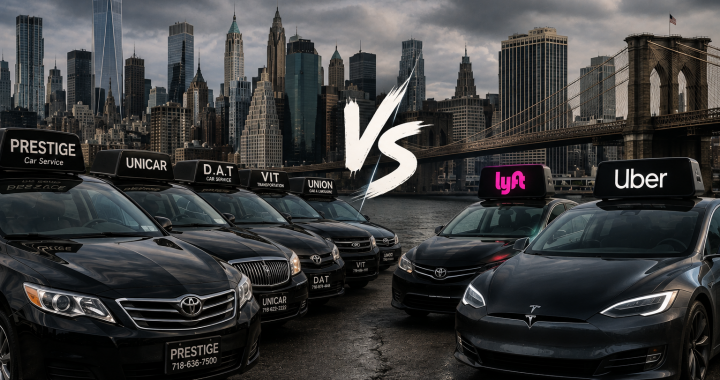
Uber and Lyft vs. NYC’s Traditional Car Service Bases: Free Market or Unfair Competition?

Rideshare apps have dramatically transformed passenger transportation in New York City. Uber and Lyft introduced a fast and convenient way for passengers to request a vehicle, see the cost of a trip before booking, track their driver, and pay directly through a smartphone.

However, the enormous growth of these platforms has also changed the conditions under which New York City’s traditional car service bases must compete.

The question TaxiSocial is raising is simple:

Are the current rules really creating a fair and sustainable competitive environment?

The Problem With Short Trips

For decades, neighborhood car service bases provided transportation throughout New York City, long before Uber and Lyft entered the market.

But operating costs have increased significantly. Commercial insurance, vehicles, maintenance, fuel, labor, technology, and other expenses have forced many traditional bases to raise their minimum fares.

lyft ride

Lyft Ride

A short trip that years ago might have started at around $7 can now have a minimum fare closer to $10 at some traditional bases.

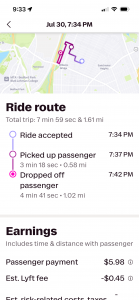
Uber and Lyft, however, can sometimes offer passengers short trips for **$7, $6, or even less**.

And that creates an enormous competitive disadvantage for traditional bases.


Consider a simple example.

A passenger needs a short ride within the neighborhood. A traditional car service quotes $10.

The passenger opens Uber or Lyft and sees a similar trip for $6 or $7.

Which service is the passenger most likely to choose?

The answer is obvious. Consumers naturally look for the best price, especially when the cheaper option also provides door-to-door service, GPS tracking, electronic payment, and the convenience of requesting a vehicle from a smartphone.

The problem isn’t that passengers choose the cheaper service.

The question is how a small neighborhood car service is supposed to compete against companies capable of offering rides at those prices.

Competition With Public Transportation

There is another interesting consequence of these extremely inexpensive short trips.

New York City’s public transportation system charges each passenger individually.

When two or more people are traveling together, there are situations where a short Uber or Lyft ride can approach the combined cost of taking public transportation.

Instead of walking to a subway station or bus stop and paying separately, passengers can be picked up at their door and dropped off directly at their destination.

This means that extremely inexpensive rideshare fares don’t only affect traditional car services.

They can also influence whether some passengers choose public transportation at all.

Traditional Bases Cannot Compete With the Same Tools

Companies such as Prestige, DAT, Unicar, and many other neighborhood car service bases were transporting New Yorkers long before Uber and Lyft arrived.

Many of these companies have modernized. They use computerized dispatching, mobile applications, electronic payments, and other technologies.

But technology alone doesn’t solve the fundamental problem.

A neighborhood base cannot match the scale of Uber and Lyft.

These platforms have massive customer networks, sophisticated pricing systems, enormous amounts of data, and the ability to distribute rides among thousands of drivers.

A small local company simply doesn’t have the same resources.

And when competition becomes primarily a battle over who can offer the cheapest short trip, traditional bases face an extremely difficult situation.

Is This Really a Level Playing Field?

TaxiSocial believes this is a question the New York City Taxi and Limousine Commission should examine carefully.

This isn’t about opposing Uber or Lyft.

And it isn’t about opposing innovation or the free market.

Competition has benefited passengers in many ways.

But government regulations exist partly because unrestricted competition between companies with dramatically different levels of market power can eventually eliminate smaller competitors.

The TLC should examine whether the current regulatory structure allows traditional car service bases and massive rideshare platforms to compete under reasonable conditions.

One issue worth discussing is whether some type of minimum fare structure should apply to very short rides, or whether another regulatory mechanism could prevent extreme pricing disparities between traditional bases and high-volume rideshare platforms.

New York Should Not Wait Until These Bases Disappear

Traditional car service bases have served New York communities for decades.

They continue to provide an important transportation option, particularly for customers who prefer calling a dispatcher, paying cash, dealing with a local company, or simply using a service they have trusted for many years.

But that customer base continues to shrink.

Uber and Lyft changed the industry permanently, and technological progress should not be reversed.

However, modernization doesn’t necessarily have to mean the disappearance of the businesses that served these communities long before rideshare apps existed.

  • New York can have innovation.
  • New York can have competitive prices.
  • New York can have Uber and Lyft.

But New York should also have a transportation market where smaller companies have a realistic opportunity to survive and compete.

Because once local competitors disappear, rebuilding that competition may be extremely difficult.

The question for the TLC, drivers, passengers, and the entire transportation industry is therefore:

Should New York City establish new rules to create a more balanced competitive environment between Uber, Lyft, and traditional car service bases?

Or should the city simply allow the market to decide, even if that ultimately means many traditional bases disappear?

The debate needs to happen before it’s too late.

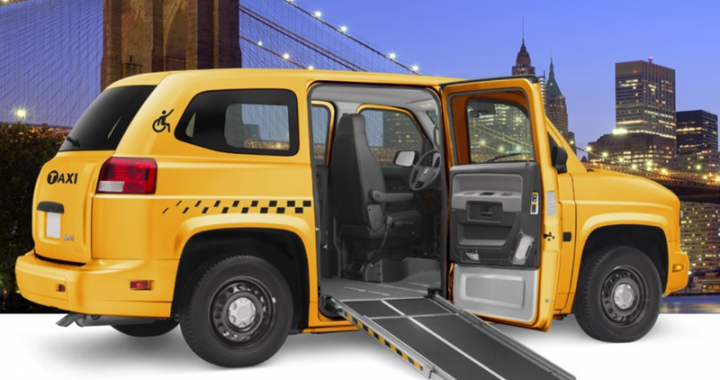
MV-1 one of the best vehicle for people with mobility challenges and Disabilities

A reliable transportation is key factor to ensure that Americans with disabilities can actively participate in the labor force and gain acces to services like pharmacy, doctor appointment, etc. As a Disability Transportation Services company you need vehicles that meets all requirements to offer the best service to your customers. Here is where MV-1 come into the scene.

The MV-1 is a revolutionary accessible vehicle that dignify the transport of people with disabilities. No more people on the luggage area. Your families with mobility challenges travel on the safely front area of the MV-1. This and other features make MV-1 users ride much more comfortable and safely than Rear-entry minivan where users must be sit in the back.

[yotuwp type=”videos” id=”guQs-ANxTf8″ ]

Safely, durable, easy to operate and Cost effective makes MV-1 a unique vehicle that accomplish all requirements that a modern world demand for people with disabilities. Take a look and discover more features that coming with the new MV-1 models visiting MV-1 website.