Rideshare apps have dramatically transformed passenger transportation in New York City. Uber and Lyft introduced a fast and convenient way for passengers to request a vehicle, see the cost of a trip before booking, track their driver, and pay directly through a smartphone.
However, the enormous growth of these platforms has also changed the conditions under which New York City’s traditional car service bases must compete.
The question TaxiSocial is raising is simple:
Are the current rules really creating a fair and sustainable competitive environment?
The Problem With Short Trips
For decades, neighborhood car service bases provided transportation throughout New York City, long before Uber and Lyft entered the market.
But operating costs have increased significantly. Commercial insurance, vehicles, maintenance, fuel, labor, technology, and other expenses have forced many traditional bases to raise their minimum fares.
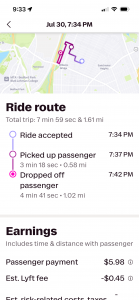
Lyft Ride
A short trip that years ago might have started at around $7 can now have a minimum fare closer to $10 at some traditional bases.
Uber and Lyft, however, can sometimes offer passengers short trips for **$7, $6, or even less**.
And that creates an enormous competitive disadvantage for traditional bases.
Consider a simple example.
A passenger needs a short ride within the neighborhood. A traditional car service quotes $10.
The passenger opens Uber or Lyft and sees a similar trip for $6 or $7.
Which service is the passenger most likely to choose?
The answer is obvious. Consumers naturally look for the best price, especially when the cheaper option also provides door-to-door service, GPS tracking, electronic payment, and the convenience of requesting a vehicle from a smartphone.
The problem isn’t that passengers choose the cheaper service.
The question is how a small neighborhood car service is supposed to compete against companies capable of offering rides at those prices.
Competition With Public Transportation
There is another interesting consequence of these extremely inexpensive short trips.
New York City’s public transportation system charges each passenger individually.
When two or more people are traveling together, there are situations where a short Uber or Lyft ride can approach the combined cost of taking public transportation.
Instead of walking to a subway station or bus stop and paying separately, passengers can be picked up at their door and dropped off directly at their destination.
This means that extremely inexpensive rideshare fares don’t only affect traditional car services.
They can also influence whether some passengers choose public transportation at all.
Traditional Bases Cannot Compete With the Same Tools
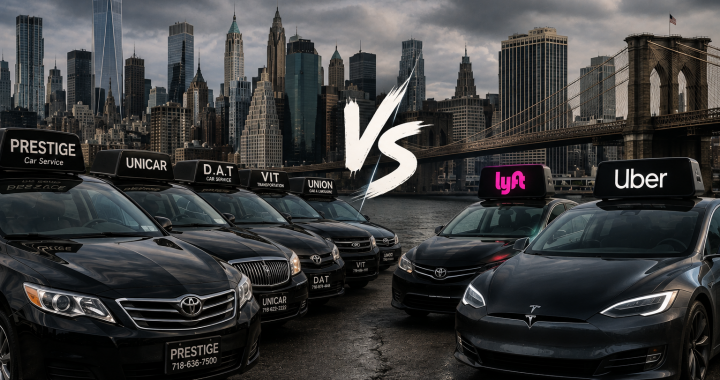
Companies such as Prestige, DAT, Unicar, and many other neighborhood car service bases were transporting New Yorkers long before Uber and Lyft arrived.
Many of these companies have modernized. They use computerized dispatching, mobile applications, electronic payments, and other technologies.
But technology alone doesn’t solve the fundamental problem.
A neighborhood base cannot match the scale of Uber and Lyft.
These platforms have massive customer networks, sophisticated pricing systems, enormous amounts of data, and the ability to distribute rides among thousands of drivers.
A small local company simply doesn’t have the same resources.
And when competition becomes primarily a battle over who can offer the cheapest short trip, traditional bases face an extremely difficult situation.
Is This Really a Level Playing Field?
TaxiSocial believes this is a question the New York City Taxi and Limousine Commission should examine carefully.
This isn’t about opposing Uber or Lyft.
And it isn’t about opposing innovation or the free market.
Competition has benefited passengers in many ways.
But government regulations exist partly because unrestricted competition between companies with dramatically different levels of market power can eventually eliminate smaller competitors.
The TLC should examine whether the current regulatory structure allows traditional car service bases and massive rideshare platforms to compete under reasonable conditions.
One issue worth discussing is whether some type of minimum fare structure should apply to very short rides, or whether another regulatory mechanism could prevent extreme pricing disparities between traditional bases and high-volume rideshare platforms.
New York Should Not Wait Until These Bases Disappear
Traditional car service bases have served New York communities for decades.
They continue to provide an important transportation option, particularly for customers who prefer calling a dispatcher, paying cash, dealing with a local company, or simply using a service they have trusted for many years.
But that customer base continues to shrink.
Uber and Lyft changed the industry permanently, and technological progress should not be reversed.
However, modernization doesn’t necessarily have to mean the disappearance of the businesses that served these communities long before rideshare apps existed.
- New York can have innovation.
- New York can have competitive prices.
- New York can have Uber and Lyft.
But New York should also have a transportation market where smaller companies have a realistic opportunity to survive and compete.
Because once local competitors disappear, rebuilding that competition may be extremely difficult.
The question for the TLC, drivers, passengers, and the entire transportation industry is therefore:
Should New York City establish new rules to create a more balanced competitive environment between Uber, Lyft, and traditional car service bases?
Or should the city simply allow the market to decide, even if that ultimately means many traditional bases disappear?
The debate needs to happen before it’s too late.